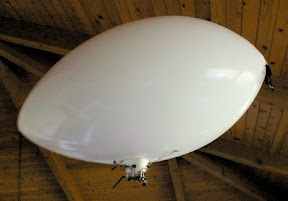
In January of this year the web was once more flooded by a fantastically designed airship concept called aeolus. The design was part of the intermediate examination (Vordiplom) of Christopher Ottersbach for an Industrial Design Degree. What's interesting is that the concept was presented in April 2008 to the public at the Hochschule für Bildende Künste Braunschweig, Germany but somehow it got into the web and a bunch of Eco Blogs picked it up, here just two of them.
Much is not known about the thoughts that went in to the project but one thing is clear the word "Design" plays a very big role in it. It has to be understood that the concept is mainly looking good and conveys a vision. It should not be seen as an engineering prototype. Commenters on the Colorado Airship-List pointed out that because of it's shape the airship would get minimal to no aerodynamic lift in contrary to the headline of one of the blogs above. Another lister pointed out:
[The] Large hull surface area means weight, drag and superheat troubles. This design would be [...] sensitive to lateral gusts and vertical wind gradients. [...] the turning characteristics would be challenging, if not a nightmare. Plus the aerostatic pressure would be relatively high compared to conventional airships.
So even though the project might look fantastic building something that would actually fly is a different story. To learn more about the project you can check the following two websites:
One thing that the airship community should take away from this is that new airship concepts also need the right presentation and working together with industrial designers might help improving the image of airships and maybe even the looks. I will try to get a hold of Christopher Ottersbach to get more background information and hopefully more pictures. Also I would love to hear from him how he designed the Airships, which tools he used and how the airship industry can profit form his work.If you happen to know Christopher please send him here maybe he can post a comment or join a discussion on the Forums.
Festo was so kind to send us the English whitepaper on the flying jelly-fish called AirJelly. We had posted the German version of it in our first post which also included the great video of the Air Jelly which has been seen over 40.000 times now. Also check out our second post about where we link to the English press release which contains some great highres pictures of the project.
AirJelly An airborne jellyfish with electric drive unit Info Glides through the air by peristaltic motion A central electric drive unit with crank mechanism Can the jellyfish’s motion through water serve as a propulsion principle for an airborne object? In other words, is it possible to glide through the air as a jellyfish swims through water? These were the considerations that gave rise to the development of AirJelly. The history of aviation has been aware of the analogy between the media of water and air ever since the first gas balloon flights of Jacques Alexandre César Charles, who on 1st December 1783 set off from Paris on the first ever manned gas balloon journey together with Noel Robert. The gondola of the “Charlière” was designed in the form of a ship’s hull. The balloon of the French aviator Jean Pierre François Blanchard, who crossed the English Channel from Dover to Calais together with Dr. John Jeffries on 7 th January 1785, also used a gondola in the form of a ship’s hull. It is therefore all the more surprising that this analogy from a bygone era has not provided inspiration for adapting the propulsion mechanisms of marine creatures for drive units in the aviation sector. In 2005, the Swiss Materials Science & Technology Development (EMPA) in Dübendorf near Zurich presented a concept in which the balloon of an airship was to be covered with electro-active polymer foils. The airship was to float in the sea of air like a fish in water. This airship has since been fitted with elevators and rudders actuated with electro-active polymer foils. Seeking recourse to jellyfish as a source of inspiration for powering gas-filled balloons is an obvious thought; after all, a jellyfish consists of water to 99%. Its weight-to-volume ratio is approximately 1, and the figure is similar for a gas-filled balloon. Jellyfish fossil finds indicate an ability to survive dating back more than 500 million years. Jellyfish have thus repeatedly adapted to various environmental and living conditions and have become veritable survival artists; the diversity of jellyfish species suggests a high degree of adaptability. AirJelly is a remote radio-controlled airborne jellyfish with a central electric drive unit and an intelligent adaptive mechanism. AirJelly consists of a helium-filled ballonett with a diameter of 1.35 meters. This yields a filling volume of 1.3 cubic meters of helium. Since one cubic meter of helium provides buoyancy to lift approximately one kilogram, the total weight of AirJelly, comprising its ballonett and all ancillary components, must amount to no more than 1.3 kilograms. AirJelly houses two lithium-ion polymer accumulator batteries rated at 8 V and 400 mA, which can be completely charged in half an hour and are AirJelly’s sole source of power. A connected central electric drive unit transmits the force to a bevel gear wheel and 2 then to eight spur gears in sequence. These gears power eight shafts, each of which activates a crank; these in turn move the jellyfish’s eight tentacles. Each tentacle is designed as a structure with Fin Ray Effect ® – a construction derived from the functional anatomy of a fish’s fin. The actual structure consists of two alternating tension and pressure flanks movably connected by ribs. If a flank is subjected to pressure, the geometrical structure automatically bends in the direction of the applied force. Together, the tentacles produce a peristaltic forward motion similar to that of their biological model. Controlling AirJelly’s motion in three-dimensional space is effected by weight displacement. For this purpose, a pendulum is set in motion by two actuators in the X and Y directions. The actuators are positioned at the jellyfish’s “north pole” and are proportionally controlled. The pendulum is 55 centimetres long. AirJelly’s centre of mass is displaced in the direction of the pendulum’s motion; the jellyfish then moves in the same direction. By means of this peristaltic forward motion, AirJelly can move in any spatial direction. Propulsion of a ballonett by means of peristaltic motion is as yet unknown in the history of aviation. AirJelly is thus the first indoor flight object with peristaltic drive. Observation of models from nature gave rise to this new propulsion concept for the airborne jellyfish. With this exhibit, Festo is demonstrating that a central electric drive unit in combination with an intelligent mechanism opens up fascinating opportunities in propulsion systems for lighter-than-air flight. Both in automation and in didactics, Festo sets out to generate enthusiasm among its customers with innovative, fascinating and intelligent solutions; it therefore offers a wide range of electric, pneumatic and hybrid drive units, along with the appropriate sensor systems, control and regulating components. 3 Project partners Project initiator: Dr. Wilfried Stoll, Chairman of the Supervisory Board, Festo AG Project team: Rainer and Günther Mugrauer, Effekt-Technik GmbH, Schlaitdorf, Germany Project manager: Markus Fischer, Corporate Design Festo AG & Co. KG Graphic design: Atelier Frank, Berlin, Germany Technical data Diameter: Height: Total weight: Propulsion: Reduction ratio: Power supply: 1.35 m 2.20 m 1.3 kg coreless motor, 3 V 262:1 lithium-ion polymer accumulator batteries; 8 V and 400 mA Festo AG & Co. KG Corporate Design Rechbergstraße 3 73770 Denkendorf Germany www.festo.com/de/bionic Phone +49/7 11/347-38 80 Fax +49/7 11/347-38 99 fish@de.festo.com Photos: Walter Fogel, Angelbachtal, Germany Brand designation: Fin Ray Effect ® is a brand of Evologics GmbH, Berlin, Germany 52938 EN
Please don't forget to subscribe to Airshipworld if you haven't subscribed yet. You can subscribe to our RSS Feed or via Email. Subscribing is free but it helps us to know how big our audience is and to see how many people are interested in airships.
On Tuesday we reported about the amazing AirJelly the jellyfish that gracefully flies through the air. Unfortunately there wasn't much information in English available. But that has changed now. We found the press release by Festo which you can access here or read the piece about the AirJelly right here and the fulyl release on Scribd. You can also go directly to Festo and get high resolution press pictures of the AirJelly here. Also check out the Video of the AirJelly on YouTube.
Air is the element of the AirJelly. Rather than swimming through water like the AquaJelly, it glides through the air with the aid of its central electric drive and an intelligent, adaptive mechanical system. The remote-controlled AirJelly is kept in the air by its helium-filled ballonet.
The AirJelly’s only energy source are two lithium-ion-polymer batteries, to which the central electric drive is attached. This transmits its power to a bevel gear and then to eight spur gears, which drive the eight tentacles of the jellyfish via their respective cranks. The structure of each tentacle is based on the Fin Ray Effect®. Using a peristaltic movement to drive a balloon was previously unknown in the history of aviation. The AirJelly is the first indoor flying object to use such a peristaltic propulsion system. The jellyfish glides gently through the air thanks to this new drive concept based on the reaction thrust principle.
The AirJelly steers through three-dimensional environments by shifting its weight. Its two servo motors are located at the “North pole” of the jellyfish and controlled proportionally. If the pendulum moves in one direction, the AirJelly’s centre of gravity shifts in this direction – the AirJelly is thus able to swim in any spatial direction. The propulsive force of the drive can be varied by moving the Fin Ray® tentacles more quickly or slowly.
Festo demonstrates with this exhibit that a central electric drive – combined with an intelligent mechanical system – can offer fascinating possibilities for “lighter-than-air” aviation. Festo aims to delight its customers with innovative, fascinating and intelligent solutions in both automation and didactics. It therefore offers a wide range of electric, pneumatic and hybrid drive systems, together with the respective sensors and control possibilities.
If you like Airshipworld and what to get more great news about Airships and everything that is Lighter-Than-Air then subscribe for free to our Feed with a feed reader or let us deliver Airshipworld right into your email inbox by subscribing via email. You can also participate in our Forums or subscribe to the Mailinglist. Join Airshipworld and exchange your thoughts with other airship enthusiasts.
Last year Festo surprised everyone with their amazing prototype of the Air_ray a manta ray that swims through the air and the b-IONIC Airfish. We reported on it in a great post which was titled "Airships are just like fish in the sky" Festo is currently at the Hannover Messe 2008 and they brought an just as stunning new project with them. We present the Air Jelly, a jellyfish that swims through the air. Currently the information about the AirJelly is only available in German at the Festo Website but the pictures speak for them self, of course we also provide you with a direct link to the autotranslated Page in English about the AirJelly The Video on the Website of Festo did not work for me so I uploaded it to YouTube just in case you can not see the "Flim" on the Festo website:
There is also a Whitepaper available as PDF which you can also read on Scribd it's also in German, an English version is not yet available to my knowledge:
AirJelly Eine Luftqualle mit elektrischem Antrieb Info Mit peristaltisch erzeugtem Vortrieb durch die Luft Zentraler elektrischer Antrieb mit Kurbelmechanik Gibt es eine Möglichkeit, die Fortbewegungsart der Quallen im Wasser auch in der Luft als Antrieb zu nutzen? Ist es also möglich, mit einer Qualle im Luftmeer zu „schwimmen“, wie dies eine Qualle im Wasser tut? Diese Fragen standen am Anfang der Entwicklungen von AirJelly. Die Geschichte der „Luft-Schiffahrt“ kennt die Analogie zwischen den Medien Wasser und Luft schon seit den ersten Gasballonfahrten durch Jacques Alexandre César Charles, der am 1. Dezember 1783 zusammen mit Noel Robert die erste bemannte Gasballonfahrt von Paris aus durchführte. Die Gondel der „Charlière“ war in der Form eines Schiffsrumpfes ausgebildet. Auch der Ballon des französischen Ballonfahrers Jean Pierre Francois Blanchard der zusammen mit Dr. John Jeffries am 7. Januar 1785 den Ärmelkanal von Dover nach Calais überquerte, nutze eine Gondel in Form eines Schiffsrumpfes. So ist es verwunderlich, dass diese Analogie in der Vergangenheit nicht dazu geführt hat, Antriebe, welche von Meeresbewohnern benutzt werden, auf Antriebe im Bereich der Luftfahrt zu übertragen. Die Eidgenössische Materialprüfungs- und Forschungsanstalt (EMPA) in Dübendorf bei Zürich hat im Jahr 2005 ein Konzept vorgestellt, bei dem die Hülle eines Luftschiffes mit elektroaktiven Polymer-Folien aktuiert werden soll. Das Luftschiff soll im Luftmeer schwimmen, analog zu einem Fisch im Wasser. Mittlerweile hat dieses Luftschiff aktiv durch elektroaktive Polymer-Folien betriebene Höhen- und Seitenruder. Quallen als Inspirationsquelle für neuartige Antriebe bei Gasballonen zu bemühen, ist naheliegend - besteht doch eine Qualle selbst zu 99% aus Wasser. Das Gewichts-/Volumenverhältnis liegt bei den Wasserquallen bei ca. 1:1. Das Gewichts-/Volumenverhältnis bei einem Gasballon liegt ebenfalls bei ca. 1:1 im Vergleich dazu. Fossilienfunde von Quallen deuten auf eine Überlebensfähigkeit seit über 500 Millionen Jahren hin. Die Quallen haben sich damit immer wieder an die unterschiedlichen Umwelt- und Lebensbedingungen angepasst und sind so wahre Überlebenskünstler geworden. Die Diversität der unterschiedlichen Quallenarten deuten auf einen hohen Grad der Anpassungsfähigkeit hin. AirJelly ist eine funkferngesteuerte Luftqualle mit einem zentralen elektrischen Antrieb und einer intelligenten, adaptiven Mechanik. AirJelly besteht aus einem mit Helium gefüllten Ballon mit einem Durchmesser von 1,35 Meter. Hieraus ergibt sich ein Befüllvolumen von 1,3 Kubikmeter Helium. Da ca. 1 cbm Helium ca. 1 Kilogramm Gewicht trägt, darf das Gesamtgewicht von AirJelly mit Hülle und allen Anbauten ca. 1,3 Kilogramm nicht überschreiten. 2 AirJelly enthält zwei Lithium-Ionen-Polymer-Akkus mit 8 Volt und 400 mA. Die Akkus können in 0,5 Stunden vollständig geladen werden und dienen AirJelly als einzige Energieversorgung. Ein daran angeschlossener zentraler elektrischer Antrieb überträgt die Kraft auf ein Kegelrad und anschließend nacheinander auf acht Stirnräder. Diese Stirnräder bewegen acht Wellen, die jeweils eine Kurbel in Gang setzt, welche die acht Tentakel der Qualle bewegen. Jedes Tentakel ist als Struktur mit Fin Ray Effect ® ausgebildet. Der Fin Ray Effect ® ist eine von der funktionellen Anatomie der Fischflosse abgeleitete Konstruktion. Die Struktur selbst besteht aus einer alternierenden Zug- und Druckflanke, die mit Spanten gelenkig verbunden ist. Wenn eine Flanke mit Druck beaufschlagt wird, wölbt sich die geometrische Struktur von selbst entgegen der einwirkenden Kraftrichtung. Zusammen sorgen die Tentakel für einen peristaltischen Vortrieb, ähnlich dem des biologischen Vorbildes. Die Steuerung im dreidimensionalen Raum von AirJelly erfolgt durch Gewichtsverlagerung. Hierzu wird ein Pendel über zwei Servomotoren in X und Y Richtung ausgelenkt. Die Servomotoren sitzen am „Nordpol“ der Qualle und werden proportional gesteuert. Das Pendel hat eine Länge von 0,55 Meter. Bewegt sich das Pendel in eine Richtung, verändert sich der Schwerpunkt von AirJelly in diese Richtung – AirJelly schwimmt nun in diese Richtung des ausgelenkten Pendels. So ist es AirJelly in Kombination mit dem peristaltischen Vortrieb möglich, in jede Raumrichtung zu schwimmen. Ebenfalls kann die Schubkraft des Antriebs durch schnelleres oder langsameres Bewegen der Fin Ray® Tentakel variiert werden. Den Vortrieb eines Ballons durch eine peristaltische Bewegung zu erzeugen, ist bis jetzt in der Luftfahrtgeschichte nicht bekannt. AirJelly ist aus diesem Grund das erste Indoor-Flugobjekt mit peristaltischem Antrieb. Die Auseinandersetzung mit Vorbildern in der Natur hat hier zu einem neuen Antriebskonzept für AirJelly geführt. Festo zeigt mit diesem Exponat, dass ein zentraler elektrischer Antrieb – kombiniert mit einer intelligenten Mechanik – faszinierende Möglichkeiten bei Antrieben in der „Leichter-als-Luft-Fahrt“ bietet. Sowohl in der Automation als auch in der Didactic möchte Festo seine Kunden mit innovativen, faszinierenden und intelligenten Lösungen begeistern. Hierfür hat Festo ein breites Angebot an elektrischen, pneumatischen und hybriden Antrieben sowie der dazugehörigen Sensorik und den Steuerungs- und Regelungsmöglichkeiten. 3 Projektbeteiligte Projektinitiator: Dr. Wilfried Stoll, Aufsichtsratsvorsitzender der Festo AG Projektteam: Rainer und Günther Mugrauer, Effekt-Technik GmbH, Schlaitdorf Projektleiter: Markus Fischer, Corporate Design Festo AG & Co. KG Grafik: Atelier Frank, Berlin Technische Daten Durchmesser: Höhe: Gesamtgewicht: Antrieb: Untersetzung: Energieversorgung: 1,35 Meter 2,20 Meter 1,3 Kilogramm Glockenankermotor, 3 Volt 262 : 1 Lithium-Ionen-Polymer-Akkus mit 8 Volt und 400 mA Festo AG & Co. KG Corporate Design Rechbergstraße 3 73770 Denkendorf Germany www.festo.com/de/bionic Telefon 07 11/347-38 80 Telefax 07 11/347-38 99 fish@de.festo.com Fotos: Walter Fogel, Angelbachtal Marken: Fin Ray Effect ® ist eine Marke der Evologics GmbH, Berlin 52863 GE
No we aren't talking about this AirshipOne we are talking about Airship One (notice the space) it's a Polish airship project from the Wrocław University in Poland. This is a short summary what the project is about:
AirShip One is a construction project of blimp with wireless piloting, that can transfer image from air in real time. Academic Aerial Club has made this project with thought about relating public events in big halls. Purpose of project is accustoming of new technical thought to life, introduction of innovative solutions and exploring of knowledge acquired on Wroclaw University of Technology in practice. Three scientific groups work over project AKL - Aerial Academic Club, DaVinci - Aerial Scientific Group, SP6PWT – Academic Club of Radio Control System also TV STYK - Student Television. AirShip One project has been made in order to cope with claims of media in range advanced relating 'on live' performances. AirShip One is an universal platform which will be capable to take up any optional equipment wanted for realization of intentional purpose. Due to big lateral surface, it can be taken advantage as flying advertising. Appliance construction without skeleton make transport easier and allows to move it in indoors by standard-sized entrances. Bearing capacity of ballast module unit totals 2 -kg. Weight without helium 10 -kg. length - 4; diameter - 2,2m; capacity – coverage 10m3 - 1000.
In our previous Video posts, here and here, we already featured the airship but here are the links to the YouTube videos again:
We got a whitepaper on the project from the main coordinator Princo, unfortunately it is in Polish, we will try to get an English translation but for now you can skim over the Polish version it contains some schematic drawings of the airship and formulas that can be understood even without knowing Polish.
Read this doc on Scribd: KNS- AirShip One Sterowiec RC, AirShip One, video-sterowiec, sterowiec transmisyjny, obraz Przemysław TOMKÓW Politechnika Wrocławska Wybrzeże Wyspiańskiego 27 50-370 Wrocław Akademicki Klub Lotniczy opiekun naukowy Janusz Gogała AIRSHIP ONE – VIDEO-STEROWIEC RC AirShip One to projekt budowy sterowca pilotowanego bezprzewodowo, mogącego przekazywać obraz z powietrza na ziemię w czasie rzeczywistym. Akademicki Klub Lotniczy stworzył ten projekt z myślą o relacjonowaniu wydarzeń publicznych odbywających się w dużych pomieszczeniach zamkniętych. Celem projektu jest wdrożenie nowych myśli technicznych w życie, wprowadzenie innowacyjnych rozwiązań oraz wykorzystanie wiedzy nabytej na Politechnice Wrocławskiej w praktyce. Nad projektem pracują dwa koła naukowe: AKL - Akademicki Klub Lotniczy oraz Studencki Klub Krótkofalowców – Eter. W projekt włączyła się również TV Styk – Telewizja Studencka. AirShip One stworzono, aby sprostać wymaganiom mediów w zakresie zaawansowanego relacjonowania imprez „on live”. AirShip One to uniwersalna platforma mogąca wynieść dowolną aparaturę potrzebną do realizacji zamierzonego celu. Dzięki dużej powierzchni bocznej, może on być wykorzystywany jako latająca reklama. Zastosowanie konstrukcji bezszkieletowej ułatwia transport oraz pozwala na wprowadzenie sterowca przez wejścia standardowych rozmiarów. Nośność kasetowego modułu balastowego wynosi 3kg. waga bez helu wynosi 10kg. Długość – 4,35m; średnica- 2,2m; objętość – 10m3 zasięg - 1000m. 1.AirShip One – Video-sterowiec RC 1.KONSTRUKCJA Konstrukcja sterowca opiera się o zastosowanie najnowszych dostępnych materiałów. Kryteria, jakimi się kierowaliśmy to bezpieczeństwo, ergonomia, żywotność. Dzięki konstrukcji bezszkieletowej sterowiec będzie łatwy w transporcie i znacznie prostszy w przygotowaniu do lotu. Chcąc podnieść bezawaryjność zdecydowaliśmy o maksymalnym uproszczeniu systemu napędowego oraz systemu sterowania, który zapewnia 7 kanałowa aparatura. Ergonomiczne rozwiązanie kasetowego modułu balastowego znacznie upraszcza montaż oraz ułatwia eksploatację 1.1.PLATFORMA NOŚNA Nośność zapewnia powłoka z tworzywa poliuretanowego wypełniona helem balonowym. Tworzywa poliuretanowe otrzymane na bazie poliestrów liniowych są odporne na oleje, smary, wodę, benzynę i rozcieńczone kwasy i ługi. Hel jest gazem zupełnie bezpiecznym (gaz niepalny) i obojętnym dla środowiska naturalnego. Aby sterowiec wyniósł kamerę z modułem nadawczym ważącą 1,5kg oraz gondolę z silnikami i układem sterowania musi mieć odpowiednią objętość. Z równania Clapeyrona obliczyliśmy nośność 1m3 helu.[1] Sterowiec będzie pracował w obiektach zamkniętych, dlatego przyjęliśmy iż ciśnienie otoczenia wynosi 100kPa. Wysokość lotu ograniczona jest wysokością hali dla uproszczenia założyliśmy, iż wynosi ona 50m. Dla tak małej różnicy wysokości przyrost ciśnienia oraz temperatury możemy pominąć. Masa 1m3 powietrza atmosferycznego wynosi: pV = mRT m p= pV R pT (1) mp=nMp Rp= 8314,7 = 287,12 28,96 (2) (1) (2) mp = Masa 1m3 czystego helu wynosi: pV = mRT 101325 ⋅ 1 = 1,383kg 287,12 ⋅ 298 mh = pV Rh T (1) mh=nMh Rh= 8314,7 = 2068,3 4,02 (2) (1) (2) mh = 101325 ⋅ 1 = 0,165kg 2068,3 ⋅ 298 Mp – masa molowa powietrza 28.96g/mol Mh – masa molowa helu 4g/mol mp – masa powietrza mh – masa helu Rp - stała gazowa dla powietrza Rh – stała gazowa dla helu MR – uniwersalna stała gazowa 8315 P - ciśnienie 101,325 kPa V- objętość 1m3 J kg ⋅ K Nośność 1m3 czystego helu wynosi: mp- mh=1,38-0,17=1,21kg W rzeczywistości nośność 1m3 helu wynosi ok. 1kg. Dzieje się tak dlatego, że do napełniania sterowca używalmy helu balonowego o czystości 92-95% Całkowitej masa konstrukcji: Masa powłoki (3,7kg) + masa gondoli (1,2kg)+ masa kamery (0,4kg) + masa akumulatorów(0,7kg) +moduł operacyjny(3kg)+balast wyważający(0,5kg) = 9,5kg Wymiary powłoki: Aby wynieść ciężar 9,5kg potrzebujemy powłokę o objętości: 9,5m 3 na hel 4.0 + 0,5m3 wynikające z konieczności pozostawienia rezerwy na rozszerzalność cieplną helu. Zastosowany zawór bezpieczeństwa chroni korpus przed nadmiernym ciśnieniem gazu. Objętość powłoki powinna wynosić ok. 10m3. Założenia te spełnia elipsa obrotowa o średnicy D=4,35m d=2,2m. 2. Wymiary powłoki 1.2.NAPĘD ORAZ STREROWANIE Napęd stanowią trzy silniki. Dwa klasy SPEED 400 o ciągu 350g każdy odpowiedzialne za ruch; przódtył, góra-dół umieszczone na ruchomych pylonach z włókien węglowych sterowanych mikro serwomechanizmem. Trzeci silnik klasy SPEED 260 umieszczony w dolnym stateczniku pionowym stanowi część fenestronu i odpowiedzialny jest za obracanie sterowca prawo-lewo. Odbiornik oraz pakiet akumulatorów znajdować się będzie w gondoli. 1.3. PRZESYŁANIE OBRAZU Zestaw nadawczo odbiorczy stanowi nadajnik z wbudowaną anteną umożliwia bezprzewodową transmisję sygnału video i fonii w paśmie 5,8Ghz oraz odbiornik umożliwiający odbiór 4 kanałów w sekwencji z regulowanym czasem. Oba elementy zamknięte są w hermetycznej obudowie oraz zasilane są napięciem 12V. Dla zapewnienia ciągłości transmisji wizyjnej wykorzystywane są dwie baterie. Jedna zamontowana w zestawie będzie umożliwiała nieustanną transmisję przez co najmniej 6 godzin, natomiast druga będzie jej zamiennikiem. Ładowanie odbywać się będzie w stacji dokującej w celu umożliwienia jak najprostszej obsługi urządzenia. 2.WYKONANIE Nad budową sterowca pracują 2 koła naukowe Politechniki Wrocławskiej. o o Akademicki Klub Lotniczy – Międzywydziałowe Koło Naukowe Akademicki Klub Krótkofalarski - Eter AKL odpowiedzialny jest za budowę platformy latającej oraz wyposażenie jej w system napędowy oraz system sterowania. Prace prowadzone są w 6-cio osobowym zespole. SP6PWT odpowiada za budowę modułu przesyłu obrazu. Poszczególne etapy powstawiania sterowca: Etap rozpoznawczy – gromadzone są informacje na temat sterowców systemów przechwytu obrazu oraz przesyłu danych. Prowadzone jest badanie rynku w celu rozpoznania podaży oraz popytu na świadczenie usługi video-transmisji z powietrza. Etap konstrukcyjny – określane są kryteria konstrukcyjne, ustalane są pożądane charakterystyki sprzętowe. Następnie wyliczana jest masa podzespołów oraz żądana nośność sterowca. Z równania Clapeyrona otrzymujemy lotność 1m3 helu na podstawie czego dobierane są parametry gabarytowe powłoki. Obliczane są osiągi poszczególnych systemów. Etap ten kończy się utworzeniem listy podzespołów potrzebnych do budowy platformy latającej oraz modułu nadawczego. Etap montażowy – budowa gondoli, powłoki oraz modułu przesyłu obrazu. Prace montażowe prowadzone są w pracowni modelarskiej Młodzieżowego Domu Kultury, z którym zostało podpisane porozumienie na potrzeby realizacji projektu. Oblatywanie sterowca – próby w locie. W pierwszej fazie lot odbywa się bez modułu przesyłu obrazu, który zastępowany jest dodatkowym balastem. Sprawdzana jest sterowność oraz stateczność konstrukcji. Wyznaczane są charakterystyki graniczne tj. prędkość maksymalna, udźwig, zasięg, czas obrotu, czas pracy silników. W drugiej fazie testów sprawdzana jest funkcjonalność modułu video-transmisyjnego. 3.ZASTOSOWANIE Sterowiec będzie wykorzystywany do transmitowania obrazu na imprezach odbywających się w obiektach zamkniętych. Zastosowanie sterowca można rozszerzyć o zrzut ulotek lub pomiar poziomu hałasu. Elementy ruchome lepiej skupiają uwagę odbiorców niż ekspozycje statyczne. Na powierzchni bocznej nadrukowany zostanie baner z logo Politechniki Wrocławskiej, dzięki czemu sterowiec będzie również wykorzystywany w celach promocyjnych uczelni. 4.AirShip One w Auli bud. A1 Politechniki Wrocławskiej - symulacja Wersja rozwojowa przeznaczona będzie do użytku zewnętrznego, a jej zadaniem będzie pomiar poziomu hałasu oraz stworzenie akustycznej mapy miasta Wrocławia. LITERATURA [1] KALINOWSKI E, „Termodynamika Techniczna”, Wrocław, Politechnika Wrocławska, 1979, 14-18 TYTUŁ PRACY W JĘZYKU ANGIELSKIM AirShip One is a construction project of blimp with wireless piloting, that can transfer image from air in real time. Academic Aerial Club has made this project with thought about relating public events in big halls. Purpose of project is accustoming of new technical thought to life, introduction of innovative solutions and exploring of knowledge acquired on Wroclaw University of Technology in practice. Three scientific groups work over project AKL - Aerial Academic Club, DaVinci - Aerial Scientific Group, SP6PWT – Academic Club of Radio Control System also TV STYK - Student Television. AirShip One project has been made in order to cope with claims of media in range advanced relating 'on live' performances. AirShip One is an universal platform which will be capable to take up any optional equipment wanted for realization of intentional purpose. Due to big lateral surface, it can be taken advantage as flying advertising. Appliance construction without skeleton make transport easier and allows to move it in indoors by standard-sized entrances. Bearing capacity of ballast module unit totals 2 -kg. Weight without helium 10 -kg. length - 4; diameter - 2,2m; capacity – coverage 10m3 - 1000.
Do you know about any other airship projects on universities all over the world, tell us about them. Send us an email or present your project directly in our forum which can be used as a mailinglist too, you just have to sign up here. Also please subscribe to our feed either via RSS or you can even get the Blog delivered to you via Email. That way you always have the latest news as soon as we posted them.
The Surveyor Corporation is currently working on constructing a small robotic blimp called YARB 1.0 (Yet Another Robotic Blimp) in their weekly update on their Build Log they report their progress regularly. It's quite impressive what is possible with just a little bit of electronics. So if you are interested in remote controlled blimps, autonomous blimps, and UAVs head over to the YARB Buildlog. They also have a video of each development step on their Site and on YouTube.
In November we featured a post about the Stratocruiser and that designers discover airships in this article we also mentioned a site by the designer Jean-Marie Massaud his website features the picture of a great white whale like airship. Now we have kept our eyes open and here is what we found out. It seems to be a project that is not really new. Even though it seems to get attention just in the last few months as it makes it's way through the Blogosphere. The first mentions of this project seem to be in French websites as early as January 2007. One mention is from Liberation.fr (English translation here) and Cote Masion.fr (English translation here) also containing pictures. A little later in in February 2007 there was a post at 365questions.org which contains the most pictures of the Massaud Manned Cloud which are known to me. We also found a video on a site that was written in Spanish and has a copyright of 2006 (English translated version here). We uploaded the video to YouTube so that you watch is easily.
As Mentioned earlier in this posts there was quite some coverage about the airship in the last few weeks. It is supposed to be a hotel for eco tourism, able to fly 280km/h and provide 60 rooms for passengers enjoying it's 3 day cruise around the world and as many project state it could be realized as soon as next year. Considering no airship ever flew that fast it's an ambitious project. According to Modern-Airships the fastest Airship to date was the Macon with about 140 km/h this ship would have to fly twice as fast. Also having 60 rooms on 500 square meters seems like a big step, considering the Hindenburg had about that size of space. Today the largest Airship the Zeppelin NT can carry 12 passengers maximum. So this is another visionary project that we will keep looking into. But till today an airship that can match the Hindenburg, Graf Zeppelin, Akron or Macon still has to be built. So here is the rest of the Coverage about the Massaud Manned Cloud Airship. As always our friends at Aerocrat where a good source. check out their post about the Massaud Airship here (English page here) But also Bornrich.org did their homework well in their Post called "Manned Cloud by Massaud Studio – The flying eco-hotel!" they linked to a some great sources:
One last source also seems to be design-italia with their post "Maned Cloud, Jean-Marie Massaud" (English translation here). We are sure that there is more but we are also wondering how much of this is actually feasible . Right now it seems to be a dream of a designer without much of an engineering background but we love to be wrong on that. If you have more information pictures, numbers, videos anything that might be of interest post a comment or send us an email.
It kind of caught me by surprise, when I was searching through you tube the other day. There were many many videos of the Zeppelin NT with a weird N470 writing on it's envelope. Like this one "Zeppelin NT07 (N470) landing at Rotterdam Airport"
But this is by far not the only video, check out the related Videos that the Video player shows after the Video is done, or take a look over at Youtube at these Videos
A little search quickly turns up the Page http://www.zirkuszeppelin.nl. Zirkus Zeppelin is from what I understand an Artproject by Florentijn Hofman about the N470 Highway in the province Zuid-Holland. As far as I understand Florentijn selected 470 people who life around the N470 or where involved during the construction of the highway to fly on the Zeppelin. They should take pictures and share their stories of the experience of the flight along the N470, all this will then be published in an illustrated book. We are going to Contact Florentijn Hoffman and Zeppelin for more information about this project. For now I invite you to check out all these Flickr images taken on the Flights along the N470
From what I could read on the Zirkus Zeppelin website the Zeppelin NT was only flying for about a week in the Netherlands but all those pictures taken prove it once again. An Airship of whatever kind is a very efficient marketing instrument that reaches many thousand people in a short amount of time and seeing an airship usually leads to positive reactions by the people who see it. We will be featuring more information about the effectiveness of Airships in marketing soon. So keep an eye out and check back regularly.
[Update]We got a reply from Florentijn Hofman, we basically got it right, so our skills in deciphering foreign languages without the tiniest bit of knowledge about them aren't so bad after all. Here is a short excerpt of the Mail we got back
... I wanted to show people the road and the area around the road from a perspective architects draw their plans. With a zeppelin you bring another layer into the project, spectaculair, the right speed to read the landscape and the history around zeppelins included. Those issues makes the choice for renting this zeppelin clear and much better than a helicopter or plane or balloon. (this last one was also no option while a wanted to bring 470 people up in the sky). ...
According to Florentijn the financing of the project was possible because the province which built the N470 took 1% of the cost of the highway construction to art and from that budget the NT could be rented.
We first reported about the Total Pole Airship Expedition way back in April 2007. Back then details were sparse and we promised to keep an eye on the project. Well the wait is over. Here are our updates. After many months the Russian AU-30 (54 m long, 13,5 m diameter, 5,000 m3) built by RosAeroSystems has been completed. Check out this Flickr slideshow by Dominique Pipet
It has been quiet around Dynalifter for a while now after the prototype got severely Damaged by a storm. But now a new website has been launched called AirshipsAfrica the domain is registered to a guy from California by the name of Harry Etheridge. And they just issued a press release unfortunately not containing any new information about Dynalifetr. That a Californian is hosting a website of an African company is interesting and one has to ask what the plan of this company is. We do not know for sure yet but will contact Airships Africa for further information. We also want to find out why (for example) the logos are so similar and what the connections of Airships Africa and Dynalifter are. If we find out more we will post it. We still have not heard any replies to our inquiries for an interview with Dynalifters Robert Rist. As of today now Dynalifter has ever flown, the prototype is in no condition to fly right now. One interesting bit that I found was on the Dynalifter website it states there:
Shortly after receiving certification, Ohio Airships achieved its primary goal of "gaining international attention" by making the Associate Press and United Press International newswires, and appearing in the New York Times, National Geographic, Wired Magazine, and on the cover of Popular Mechanics Magazine.
To me Dynalifter still seems to be in an early stage of gaining publicity, eventhough their websites press section has not been updated since November 2006. Another claim that is made by Dynalifter is that there is little need for infrastructure which is true, in fact there must not be to much infrastructure around otherwise the Craft will not be operable. With the smallest Dynalifter (according to Dynalifter.com) being 580ft (176m) long which is 2,4 times the length of the A380 with 239ft (73m) which is going to make it difficult to manoeuvre on a regular airport with other ground traffic. Since the Dynalifer can not take of vertically it needs a runway even if it is small. With a lift of 45,000lbs (22 t) the Airbus in it's freight configuration A380F has a maximum payload of 300.000lbs (150 t). So the question has to be asked, how is buoyancy's handled if 22t are removed from the craft. And how are trucks with together 22t of cargo drive on a grass strip. It has to be seen if there is a niche for the Dynalifter when the first one is built and sold. Until then we will continue to keep an eye on Dynalifter and will report of any updates and progress of the project. If you want to read more about the project read our previous posts about Dynalifter.
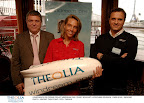
Since we posted the first article about the Theolia Winddream One project back in June 2007 there has not been much new with the project. So to refresh you memory the Windream One project sponsored by Theolia aims to fly across the Atlantic from Africa to America in a small two person airship that is powered by solar energy and the wind. The team consists of Stéphane Rousson who built the Zeppy pedal powered Blimp and Peggy Bouchet who rowed across the Atlantic Ocean by herself. For more info about the project read our previous post about the project. Since June there has not been much on the web besides a few videos released by Stéphane Rousson, who first created the pedal powered blimp Zeppy. The experience gained from this project is used for the Windream One. So take a look at the latest videos from YouTube.
The second video shows similar footage to the first video but has some more shots of the flight where the other video cuts to other scenes. Dirigeable à pédales
This video is the first flight of Miss Louise, which is probably the nick name of the second pedal powered Blimp the original Zeppy Blimp had a golden envelope. First flight Miss Louise
Friedrichshafen, September 22nd 2007 – The moored airship was considerably damaged by a sudden whirl wind on Thursday. Experts asses damage to be beyond repair. After disassembly first parts will be transported to Gaborone.
The damage makes it impossible to repair the airship. At the time of the occurrence the prototype was moored at the mast. The airship was not operated. The aft section hit ground first. The incident is classified as damage on ground by the Civil Aviation Authority (CAA) Botswana.
The CAA Botswana has released the airship documentation without objection. The authorities have released the airship for transport to the hangar in Gaborone. After detail assessment the ZLT will decide on a possible use of part of the airship.
Well this means there is going to be one Zeppelin less around, but the question is how much longer was the prototype destined to fly and will the parts that are still intact be used for the fifth Zeppelin NT or for a resurrected prototype? Please also take a look at our previous Zeppelin articles and subscribe to the Blog for further updates. You can do this by subscribing to our RSS feed or via Email.
Today we want move a bit away from our hot air coverage before coming back to it, in the following days. There is a new hybrid airship concept in the works. It has won an innovation price in 2006(in German) from a German science TV show called "Welt der Wunder" and uses a lenticular envelope, with two non directional wings which will rotate to provide vertical take of and landing abilities. Csaba Singer from the Deutsches Zentrum für Luft- und Raumfahrt (DLR) held a presentation about the Project at the DGLR Workshop X in Munich mid June 2007. Csaba Singer made the presentation slides available for download, so if you didn't have a chance to catch it back then you can now take a look at them. Also there has been a German patent application which can be seen at the DEPATISnet Website of the German patent office, it provides more diagrams and details than the presentation. There are also two videos available on YouTube. This first one is a computer animated video showing how the airship could work: http://www.youtube.com/watch?v=vIFhNzJZxzo
The second video shows a model prototype of the airship performing different maneuvers: http://www.youtube.com/watch?v=gmUcpEJys_Y Right now Csaba Singer and the DLR are looking for Students wanting to write their master thesis on the project. If you are a student and interested in this, please go to the Website of the DLR and read the description of the topic. Or contact Csaba Singer at the DLR under: Csaba Singer German Aerospace Center Institute of Technical Thermodynamics, Solar Research Stuttgart - Germany Tel.: +49 711 6862-490 Fax: +49 711 6862-747
What do you think about the project, will it be successful? Will it have scaling issues? Has there been something similar that has been developed, or patented? Tell us what you think leave your comments or write us an email. It's another ambitious project that we will keep an eye on. Make sure to checkout the English Hybrid-Airplane Website or German Hybrid-Flugzeug Website.
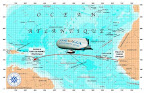
The last transatlantic flight by an airship was around 1937, the crash of the Hindenburg put a sudden end to this era. Now more than 70 years later a new project is under development, called Windream One. It is financed and sponsored by Theolia, an independent European company producing 100% clean energy from wind power sources and others, like biomass or solar energy. The project was already announced on march 20th this year but we haven't yet had a chance to report about it. Now they have reached another milestone which lead us to report about it. The project consists of a team of twenty private and university researchers, technical and financial partners, all thanks to the inspiration, knowledge and daring of the project’s pilots – the creator behind the project Stéphane Rousson, well known in the LTA (lighter than air) industry for his Zeppy Project and the navigator-adventurer Peggy Bouchet, whose project expertise and experience include rowing solo across the Atlantic. The Windream One is a dirigible that is powered by the sun through solar power the wind and the sea using a unique technology called « chien de mer » (CDM). I could not yet figure out exactly how it works, but as soon as we find out we will report on it. Stéphane has started tests with the CDM just a few days ago, as is reported by gizmag. The article also contains some pictures of the Zeppy Blimp using the CDM. The actual crossing flight of the Windream One is scheduled for 2008, right now the team has set up a camp at a former Naval Air Station on the French Mediterranean coast. Besides technical tests, Stéphane and Peggy go through survival and flight trainings, to be prepared for the great voyage. We will continue to report on the progress of the project, if you want even more infos right now, check out these PDFs especially the press pack is very interesting since it gives you an overview about the whole project. They are in chronoloigcal order, the last one is the newest one.
Is there anything that you would like to know in particular? Anything that we should investigate? Email us or post in the comments, we will try to address your questions in our next post about the Windream One project.
Alex and Brian Hall from Airshipventures mentioned already in a previous post are now actively posting quite a bit on their blog Airshipventures the first post of today is about the Zeppelin which is scheduled to be in London 2008, an article in the UK Sunday Times talks about the guy who wants to bring the Zeppelin to London, and ya the Times thinks airships fly with hot air, at least that's the impression you get from reading the article. The guy is supposed to be a "recent 'firing' from the UK equivalent of 'The Apprentice' TV" according to the article. Alex's comments are worth a read, check them out over at Airshipventures. But they didn't rest after that one Post, the also published a clarification post with the Title "Yes, we mean Zeppelin". To me it's clear what that means, Alex and Brian Hall are trying to get a Zeppelin NT over to the US, if they will just operate it or actually buy it, well I don't know but we sure will post about it when we find that out. If you want us to report on your airship related news drop us an email or post a comment on the blog, we will for sure read everything you send us and consider it as a post. Check back tomorrow for more news from the airhsip business maybe from Airshipventures, but for sure from somewhere in the LTA industry.
I just discovered a new Project Website that I would like to share with you. It is the "Total Pole Airship" a project flying with an airship to the northpole.
In the context of the International Polar Year (IPY) 2007-2008, the Total Pole Airship expedition aims to measure the thickness of the pack ice layer covering the Arctic Ocean.
I just found out that he two "guys" from Airshipventures are actually not two guys but husband and wife Brian and Alexandra Hall. Just wanted to clarify that. The Airshipventures website will be changing quite a bit in the next couple of weeks, and I will course keep track and keep you updated.