BAE SYSTEMS FLOATS AUTONOMOUS SYTEM AT FARNBOROUGH INTERNATIONALThe UK based Company of Per Lindstrand has specialized on Inflatable Structures, Tehtered balloons, and Lighter-Than-Air Vehicles. You can read a bit more about the GA-22 Airship on their website. Per Lindstrand also owns the GA-42 Airship the worlds first fly-by-wire that was introduced in 1980. If you want to have a look at the Type Certificate jump over to the FAA Website
14 Jul 2008 | Ref. FI020/2008
A 22 meter long airship, originally developed by balloonist and adventurer Per Lindstrand, could become the latest addition to BAE Systems growing portfolio of autonomous systems.
The GA22 airship, perfect for deployment into roles such as communications relay stations, will be updated and adapted to carry payloads, such as high tech surveillance equipment at up to 150 kilograms in weight, to heights of more than 6,500 feet
BAE Systems plan to integrate their existing Unmanned Autonomous Systems into the GA22 making the technology more accessible to potential users.
“Strategically, GA22 fits perfectly into the autonomous fleet that we are developing“said Richard Williams, Director of Civil Autonomous Systems at BAE Systems “The new vehicle has the possibility of opening up a range of markets for BAE Systems. It has a range of unique capabilities and we have identified a number of roles at major events, from sporting occasions to floods and forest fires, for which GA22 is ideal”.
BAE Systems designers and engineers have worked with Lindstrand Technologies to update the original design. GA22 will be able to carry high-tech surveillance equipment, including a payload of up to 150 kilograms, to heights of more than 6,500ft. In addition, it is being made from a newer and lighter material, which improves the airship’s performance. At the moment GA22 is radio controlled, but the plan is to make it fully autonomous.
Richard continued: “Even more exciting are the long-term prospects for success. I have no doubt that GA22 can make a significant contribution to our civil autonomous systems business,” Richard concludes.
About BAE Systems
BAE Systems is the premier global defence and aerospace company delivering a full range of products and services for air, land and naval forces, as well as advanced electronics, information technology solutions and customer support services. With 97,500 employees worldwide, BAE Systems' sales exceeded £15.7 billion (US $31.4 billion) in 2007.
Wednesday, July 23, 2008
BAE Systems and Lindstrand Technologies update the GA-22 Airship
At the Farnborough Airshow that ended last sunday BAE Systems announced they are planning to integrate their existing Unmanned Autonomous Systems in the Lindstrand GA-22 Airhship. The GA-22 Airship was first supplied to the Ministry of Defense in Spain in 2004 and carried a 42kg load. Read the full press release below:
tags:
bae systems,
ga-22,
ga-42,
lindstrand technologies,
uav
Tuesday, July 22, 2008
Airship will fly over the Nazca geoglyphs in Peru
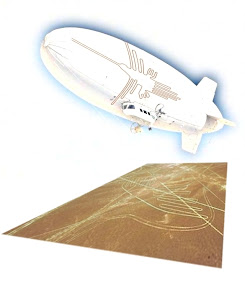
The ancient lines and geoglyphs in Nazca, Peru have fascinated mankind for a long time. Just recently they were featured in "Indiana Jones and the Kingdom of the Crystal Skull". In order to make sure the world has a permanent record and to survey the endangered lines a new Project is underway to this with a low flying, low impact Airship. John Christopher from Airship Initiatives most well known for his Zeppelin Tours is announcing a new Project this week: The Airship Nasca Project working with Professor Nick Saunders and the University of Bristol Archaeology Department who himself is involved in on-going research at Nazca with Professor Clive Ruddles of Leicester University. The survey mission is planned to take place in 2010. To read more about the project. Go to the Airship Nazca Website and read the press release that Airship Initiatives has put out. Below are also some more pictures of the project and the concept.
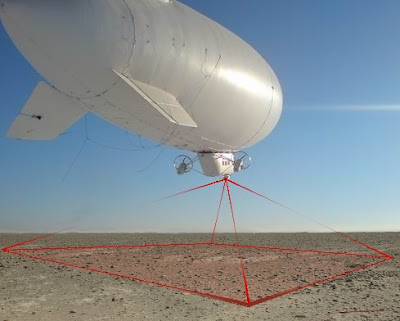
The Airship Nazca Project PRESS RELEASE: Issued 25 July 2008 – for immediate release Announcing the Airship Nazca project Airship Nazca is an exiting new project using an airship as an aerial platform for a photographic and remote-sensing survey of the endangered lines and geoglyphs in Peru, which were featured recently in the film 'Indiana Jones and the Kingdom of the Crystal Skull'. The Lines and Geoglyphs of Nazca and Pampas de Jumana are one of the greatest cultural wonders of our planet. Situated in south-western Peru, 500 square km of arid plains are covered with lines straight as an arrow, fantastic geometric shapes and over seventy drawings of animals, insects and even human figures. These geoglyphs are huge, for example the famous Monkey with its spiralling tail is over 91.5 m across, while the Hummingbird - the symbol for this project and which in Andean mythology represents a special messenger of the gods - has a wingspan of 61 m. Best seen from the air, their purpose and how they were made has intrigued archaeologists and mathematicians ever since their re-discovery. But now they are under threat and may face irredeemable damage as the result of tourism pressure and the impact of climate change. In 2010 Airship Nazca will undertake the most detailed survey of the site ever conducted. “It will raise the profile of Nazca and other sites at risk, emphasising the need to protect the drawings while providing a blueprint of every square centimetre,” commented John Christopher of Airship Initiatives, the project coordinator. Heritage under threat Nazca is one of the most fragile archaeological sites in the world. The plains consist of a powdery gypsum-laden soil covered by a layer of rocks and stones; glacial debris that has been fragmented into small pieces. These stones have a high iron content and through oxidization they have darkened to give the site its distinctive reddish-brown tone. The lines and geoglyphs were created by clearing the stones and piling them to either side, thus exposing and contrasting the stones with the lighter-coloured soil underneath. The reason why the lines and geoglyphs have survived for so long is because of the site's stable climate which has almost no rain. However as reported by UNESCO there is growing concern about the impact of climate change upon many world heritage sites and in Peru there are regional factors with deforestation and erosion blamed for mudslides and flash-floods in many areas. In 2000 unusually heavy rains triggered mudslides in the hills south of the drawings, causing damage to one of the minor lines and prompting one archaeologist to declare it "an important wake up call." The rise in international tourism has brought mixed blessings to many parts of the world. Of concern at Nazca is not the quantity of visitors, but the actions of a few. Because the surface is so fragile any marks made by the tyres of a vehicle, or even a footprint, will last as long as the lines themselves. Tourists are now kept off the main area and see the drawings from the 15 m viewing tower or from light aircraft. Location The Nazca lines and geoglyphs cover the arid plains situated between the Pacific Ocean and the coastal mountains in the south-west of Peru. Location coordinates: 14 degrees 41' 38.3” S, Long 75 degrees 06' 49.6” W Why use an airship? The airship is an ideal stable platform from which to conduct a low-level survey. It can be adapted to carry a range of equipment and instruments, flying low-and-slow or even maintaining station if required. The airship can also take best advantage of the light conditions to photograph the lines and drawings which are shallow and do not show up well on satellite imagery. It will also provide the opportunity to carry equipment and experiments devised by students and school children and some may even get the opportunity to fly in the airship as part of their studies. Crucially, given the fragile nature of the Nazca site, the airship is environmentally non-intrusive and the entire survey will be conducted without leaving a single footprint on the surface. Recent advances in remote sensing technology, especially with Lidar which using pulses of light to produce accurate terrain modelling, should provide the most comprehensive survey of Nazca ever attempted. World Heritage Site The Lines and Geoglyphs of Nazca and Pampas de Jumana were inscribed on to the World Heritage List relatively recently, in 1994. The list, maintained by the World Heritage Programme administered by UNESCO, includes 878 sites which are considered as having outstanding importance. The Airship Nazca project team The Airship Nazca project has been devised by John Christopher of Airship Initiatives, a UK-based company dedicated to putting airships to work. With extensive experience in lighterthan-air flight and operations, Airship Initiatives are involved in a range of airship projects and also act as independent consultants for clients all over the world. The Zeppelin Tours part of their operation organises airship pleasure flights in many countries including Germany, Japan, the UK and in the USA. Airship Initiatives is working with Professor Nick Saunders and the University of Bristol Archaeology Department on the archaeological aspects of the project, and the handling of the data and imagery obtained. Nick Saunders is recognised internationally as an expert on the Nazca lines and geoglyphs and, together with Professor Clive Ruddles of Leicester University, is involved in on-going research at Nazca. For more information or pictures contact: John Christopher, Airship Initiatives Email jc@airshipinitiatives.com Tel +44 (0)870 479 8373 www.airshipnazca.com

© Airship Nazca Project

© Airship Nazca Project

© Airship Nazca Project
Please spread the word share it on Delicious, Digg, Reddit, send email to your friends, publish it on your website. There are a couple of links at the bottom of this post that make this easier, try it out.
Read this document on Scribd: Announcing the Airship Nazca project
The Airship Nazca Project PRESS RELEASE: Issued 25 July 2008 – for immediate release Announcing the Airship Nazca project Airship Nazca is an exiting new project using an airship as an aerial platform for a photographic and remote-sensing survey of the endangered lines and geoglyphs in Peru, which were featured recently in the film 'Indiana Jones and the Kingdom of the Crystal Skull'. The Lines and Geoglyphs of Nazca and Pampas de Jumana are one of the greatest cultural wonders of our planet. Situated in south-western Peru, 500 square km of arid plains are covered with lines straight as an arrow, fantastic geometric shapes and over seventy drawings of animals, insects and even human figures. These geoglyphs are huge, for example the famous Monkey with its spiralling tail is over 91.5 m across, while the Hummingbird - the symbol for this project and which in Andean mythology represents a special messenger of the gods - has a wingspan of 61 m. Best seen from the air, their purpose and how they were made has intrigued archaeologists and mathematicians ever since their re-discovery. But now they are under threat and may face irredeemable damage as the result of tourism pressure and the impact of climate change. In 2010 Airship Nazca will undertake the most detailed survey of the site ever conducted. “It will raise the profile of Nazca and other sites at risk, emphasising the need to protect the drawings while providing a blueprint of every square centimetre,” commented John Christopher of Airship Initiatives, the project coordinator. Heritage under threat Nazca is one of the most fragile archaeological sites in the world. The plains consist of a powdery gypsum-laden soil covered by a layer of rocks and stones; glacial debris that has been fragmented into small pieces. These stones have a high iron content and through oxidization they have darkened to give the site its distinctive reddish-brown tone. The lines and geoglyphs were created by clearing the stones and piling them to either side, thus exposing and contrasting the stones with the lighter-coloured soil underneath. The reason why the lines and geoglyphs have survived for so long is because of the site's stable climate which has almost no rain. However as reported by UNESCO there is growing concern about the impact of climate change upon many world heritage sites and in Peru there are regional factors with deforestation and erosion blamed for mudslides and flash-floods in many areas. In 2000 unusually heavy rains triggered mudslides in the hills south of the drawings, causing damage to one of the minor lines and prompting one archaeologist to declare it "an important wake up call." The rise in international tourism has brought mixed blessings to many parts of the world. Of concern at Nazca is not the quantity of visitors, but the actions of a few. Because the surface is so fragile any marks made by the tyres of a vehicle, or even a footprint, will last as long as the lines themselves. Tourists are now kept off the main area and see the drawings from the 15 m viewing tower or from light aircraft. Location The Nazca lines and geoglyphs cover the arid plains situated between the Pacific Ocean and the coastal mountains in the south-west of Peru. Location coordinates: 14 degrees 41' 38.3” S, Long 75 degrees 06' 49.6” W Why use an airship? The airship is an ideal stable platform from which to conduct a low-level survey. It can be adapted to carry a range of equipment and instruments, flying low-and-slow or even maintaining station if required. The airship can also take best advantage of the light conditions to photograph the lines and drawings which are shallow and do not show up well on satellite imagery. It will also provide the opportunity to carry equipment and experiments devised by students and school children and some may even get the opportunity to fly in the airship as part of their studies. Crucially, given the fragile nature of the Nazca site, the airship is environmentally non-intrusive and the entire survey will be conducted without leaving a single footprint on the surface. Recent advances in remote sensing technology, especially with Lidar which using pulses of light to produce accurate terrain modelling, should provide the most comprehensive survey of Nazca ever attempted. World Heritage Site The Lines and Geoglyphs of Nazca and Pampas de Jumana were inscribed on to the World Heritage List relatively recently, in 1994. The list, maintained by the World Heritage Programme administered by UNESCO, includes 878 sites which are considered as having outstanding importance. The Airship Nazca project team The Airship Nazca project has been devised by John Christopher of Airship Initiatives, a UK-based company dedicated to putting airships to work. With extensive experience in lighterthan-air flight and operations, Airship Initiatives are involved in a range of airship projects and also act as independent consultants for clients all over the world. The Zeppelin Tours part of their operation organises airship pleasure flights in many countries including Germany, Japan, the UK and in the USA. Airship Initiatives is working with Professor Nick Saunders and the University of Bristol Archaeology Department on the archaeological aspects of the project, and the handling of the data and imagery obtained. Nick Saunders is recognised internationally as an expert on the Nazca lines and geoglyphs and, together with Professor Clive Ruddles of Leicester University, is involved in on-going research at Nazca. For more information or pictures contact: John Christopher, Airship Initiatives Email jc@airshipinitiatives.com Tel +44 (0)870 479 8373 www.airshipnazca.com

© Airship Nazca Project

© Airship Nazca Project

© Airship Nazca Project
Please spread the word share it on Delicious, Digg, Reddit, send email to your friends, publish it on your website. There are a couple of links at the bottom of this post that make this easier, try it out.
Friday, July 18, 2008
Revolutionary Hot Air Balloon Evelope reduces engery consumtion by half - Festo has done it yet again.

© Festo Read this document on Scribd: Insulated Balloon
Insulated hot - air balloon A hot - air balloon with fuel consumption reduced by half Innovative insulation sets standards in energy efficiency for balloons Volume - specific buoyancy (kg / m²) 0.40 +50 % 0.30 -50 % with 3.5 mm insulation without insulation 0.20 0.10 0.00 200 surface - specific heat output (W / m²) 300 400 500 600 700 800 Flock insulator Results of measurements on the model balloon (volume: 30 m3) Conveying five persons in a hot-air balloon for one hour consumes around the same amount of fuel as an economical passenger car during a drive from Berlin to Barcelona. Thanks to an innovative ultra - light membrane flock insulating material, the fuel consumption of a balloon can be reduced by more than 50 %, or its carrying capacity can be correspondingly increased for the same consumption rate. Insulated hot - air balloon, which was manufactured for Festo, is the world’s first balloon to include this new insulating material, which allows the number of fuel cylinders to be reduced and additional passengers to be transported. At the same time, the thermal load on the balloon material is reduced and its service life thereby extended. In the development project HeiDAS (hot-steam aerostat) by Festo, steam was used instead of hot air to fill the balloon. Steam has twice the load-bearing capacity of air; however, it necessitates insulation to prevent condensation from forming on the interior of the balloon envelope. For this purpose, flock insulation is bonded to a light but sensitive carrier foil that was first produced on commission from Festo in 2003. The membrane flock insulating material was further developed and applied to the insulated steam balloon. A new ultralight metallised base fabric transforms the foil into an insulating material suitable for everyday use in balloons. The innovative membrane flock insulating material provides the layer of air required for insulation by means of vertically oriented raised fibres on the base membrane. This membrane with its spacing elements is known as the spacing layer. The gap is closed by a covering layer. The insulting effect is determined by the width of this space, the flock pattern and the surface characteristics of the spacing and covering layers. The outer layer of the balloon envelope itself provides the insulation. The membrane flock insulating material is extremely light, highly reflective, mildly heat - reflective, temperature - resistant, compressible, readily adaptable to individual requirements and easily optimised by means of adjusting the spacing gap and the number of layers. High compressibility is a fundamental requirement, since balloons are packed and transported after a flight. Simulations and measurements carried out with test balloons have provided for initial insulation optimization and savings estimates. Subsequent measurements on the test balloons have confirmed that fuel consumption is reduced by half for a given buoyant force, or carrying capacity is considerably increased for a given quantity of fuel. 2 Insulated hot - air balloon in the air The lightweight insulation is situated on the interior of the envelope, where it is protected against the adverse effects of everyday handling; this insulation in turn protects the load bearing envelope against the effects of high temperatures. Higher temperatures than usual are encountered on the inner surface of the insulating material, while the cooler exterior of the envelope hardly radiates any heat. To test this technology in practice, the engineers from UltraMagic and the Technical University of Berlin undertook trials using a first manned and insulated test balloon with a volume of 1.600 m3, under various conditions for a period of six months. This prototype completed about 100 hours of operation, during which it attained consumption savings of more than 70 % and confirmed the material’s durability. With increasing size, the ratio of a balloon’s surface area to its volume decreases. At the same time, the internal pressure on the insulating material increases and reduces the insulating gap between the envelope layers. These effects could impair the function of the insulation. To demonstrate the effectiveness of the aerofabríx® insulation in the new Festo insulated hot - air balloon, a special race was staged: fuel consumption was measured in a direct comparison with an uninsulated balloon of the same volume and with the same load. After 40 minutes of operation, the conventional balloon had used 37.2 kg of Thermographic images without insulation (left, approx. 55° C) and with insulation (right, approx. 40° C) of model balloons with 30 m3 volume and identical load-bearing capacity propane – the contents of several tank cylinders. The insulated hot air balloon, by contrast, had consumed less than 11 kg – in other words 30 % of the fuel required by the conventional balloon; this represents a drastic improvement in energy efficiency. The insulated hot - air balloon shows what innovations are possible in lighter - than - air aviation. Festo manufactures energy - efficient products and advises its customers as to how energy can be put to even more efficient use in automation. With the insulated hot air balloon insulated balloon envelope, it will be possible to make balloon travel 50 % more efficient in future. 3 Technical data Balloontype: Volume: Envelope weight: Passengers: Fabric insulation: Thickness: Specific weight: Thermal conductivity: U value (6 mm): Max. operating temperature: M - 105 3000 m3 158 kg 4–5 aerofabríx® [Iso] 45 | 4.5 6 mm 45 g / m2 0,0265 W / mK 4,5 W / m2K 140° C Project partners Project initiator: Dr. Wilfried Stoll, Chairman of the Supervisory Board, Festo AG Project manager: Dipl. - Ing. (FH) Markus Fischer, Corporate Design Festo AG & Co. KG Envelope concept and manufacture: Josep Maria Lladó Costa, UltraMagic S.A., Igualada, Spain Material development and manufacture: Dr. - Ing. Alexander Bormann, Dipl. - Ing. Stefan Skutnik, Milan Habovcik, German Aerospace Centre (ILR), Technical University of Berlin, Germany Christian Gebhardt, aeroíx, Berlin, Germany Thermographic images and laboratory tests: Ilka Rudolph, Martin Wähmer, Maik Scheel German Aerospace Centre (ILR), Technical University of Berlin, Germany Flock technology consultants: Prof. Chokri Sherif, Birgit Mrozik Institute of Fibre and Apparel Technology (ITB), Technical University of Dresden, Germany Joachim Müller, Engineer’s office for flock technology, Büdingen, Germany Balloon operator for Festo: Rien Jurg Promotions BV, Hengelo, The Netherlands Further support and consultation: Prof. Jürgen Thorbeck, German Aerospace Centre (ILR), Technical University of Berlin Yousif Abdel Gadir, aerarium e.V., Berlin, Germany Photos: Walter Fogel, Angelbachtal, Germany Festo AG & Co. KG Corporate Design Rechbergstraße 3 73770 Denkendorf www.festo.com / ballooning Phone +49 / 7 11 / 347 - 38 80 Fax +49 / 7 11 / 347 - 38 99 fish@de.festo.com Brand designation: aerofabríx® is a brand of Dr. - Ing. Alexander Bormann, Berlin, Germany 53342 EN
Read this document on Scribd: Isolierter Ballon
Isolierter Heißluft - Ballon Ein Heißluft - Ballon mit halbiertem Brennstoffverbrauch Innovative Isolation setzt Maßstab bei der Energie - Effizienz von Ballonen Volumenspezifischer Auftrieb (kg/m2) 0,40 +50 % 0,30 -50 % mit 3,5 mm Isolation ohne Isolation 0,20 0,10 0,00 200 Oberflächenspezifische Heizleistung (W/m2) 300 400 500 600 700 800 Membran-Flock-Dämmstoff Ergebnisse der Messungen am Modellballon mit 30 m3 Um im Heißluftballon mit fünf Personen eine Stunde in der Luft zu schweben, wird etwa so viel Brennstoff verbrannt, wie ein sparsames Auto für die Fahrt von Berlin nach Barcelona benötigt. Mit Hilfe eines innovativen, ultraleichten Membran - Flock Dämmstoffs kann nun der Verbrauch des Heißluftballons um mehr als 50 % gesenkt bzw. dessen Tragkraft bei gleichem Verbrauch entsprechend gesteigert werden. Der isolierte Heißluft - Ballon, der für Festo gebaut wurde, ist der weltweit erste Ballon, der mit dieser neuen Isolation ausgeliefert wird. Die Isolation ermöglicht die Reduzierung der Anzahl von Brennstoffzylindern und die Mitnahme von zusätzlichen Passagieren. Gleichzeitig reduziert sich die thermische Beanspruchung der tragenden Ballonhülle, was die Lebensdauer der Hülle verlängert. Im Entwicklungs - Projekt HeiDAS (Heißdampfaerostat) von Festo, wurde anstelle von Heißluft im Ballon Wasserdampf verwendet. Dieser besitzt die doppelte Tragkraft, erfordert aber eine Isolation, um die Kondensation des Dampfes im Traggasbehälter zu vermeiden. Dafür wurde 2003 im Auftrag von Festo erstmals die Flockisolation auf leichter, aber empfindlicher Trägerfolie produziert. Der Membran-Flock-Dämmstoff wurde weiterentwickelt und auf den isolierten Heißluft-Ballon übertragen. Ein neues ultraleichtes, metallisiertes Trägergewebe macht nun aus der Folienisolation einen alltagstauglichen Ballondämmstoff. Beim innovativen Membran - Flock - Dämmstoff wird die für die Dämmwirkung erforderliche Luftschicht durch senkrecht auf der Trägermembran stehende, aufgeflockte Fasern gewährleistet. Die Trägermembran mit Abstandshaltern wird Abstandslage genannt. Der Spalt wird durch eine Decklage geschlossen. Der Abstand, das Flockmuster und die Oberflächeneigenschaften von Abstandslage und Decklage definieren die Isolationswirkung. Bei der Ballonisolation stellt die äußere Ballonhülle selbst die Decklage dar. Der Membran - Flock - Dämmstoff ist extrem leicht, hoch reflektierend, gering wärmeabstrahlend, temperaturbeständig, komprimierbar, leicht konfektionierbar und durch Spaltabstand und Lagenanzahl einfach optimierbar. Hohe Komprimierbarkeit ist eine grundlegende Forderung, da Ballone nach dem Flug verpackt und transportiert werden. Simulation und Messungen an Versuchsballonen erlaubten eine Voroptimierung der Isolation und die Abschätzung der Einsparung. Die nachfolgenden Messungen an Versuchsballonen bestätigten eine Halbierung des Verbrauchs bei gleich bleibendem Auftrieb bzw. eine deutliche Steigerung der Tragkraft bei gleichem Verbrauch. 2 Isolierter Heißluft - Ballon in der Luft Die leichte Isolation wird an der Innenseite des Ballons angebracht, womit sie vor den rauen Einwirkungen beim Handling des Ballons geschützt ist und ihrerseits nun die tragende Hülle vor hohen Temperaturen schützt. Dabei treten an der Innenseite der Isolation durchaus höhere Temperaturen als üblich auf, die kühlere Außenseite der Hülle strahlt kaum noch Wärme ab. Um die neue Technologie in der Praxis zu erproben, testeten die Ingenieure von UltraMagic und der Technischen Universität Berlin sechs Monate lang einen ersten bemannten und isolierten 1600 Kubikmeter großen Versuchsballon unter verschiedenen Einsatzbedingungen. Dieser Prototyp absolvierte etwa 100 Flugstunden, erreichte Verbrauchseinsparungen von über 70 % und bestätigt die Haltbarkeit des Materials. Mit zunehmender Größe verringert sich das Verhältnis von Oberfläche zu Volumen der Ballone. Gleichzeitig steigt der Innendruck auf die Isolation und presst den isolierenden Spalt weiter zusammen. Diese Effekte könnten den Vorteil der Isolation schmälern. Um die Wirksamkeit der aerofabríx® Isolation beim neuen isolierten Heißluft - Ballon von Festo zu demonstrieren, fand eine Wettfahrt der besonderen Art statt: parallel zu einem nicht isolierten Ballon mit gleichem Volumen und gleicher Beladung galt es, den Verbrauch im direkten Vergleich zu bestimmen. Nach 40 Minuten Fahrzeit verbrauchte der konventionelle Ballon mit 37,2 kg Propan den Inhalt aus mehreren Tankzylindern. Thermografieaufnahmen ohne Isolierung (links, ca. 55° C) und mit Isolierung (rechts, ca. 40° C) an Modellballonen mit 30 m3 Volumen bei gleicher Tragkraft Der isolierte Heißluft-Ballon begnügte sich hingegen mit weniger als 11 kg und benötigte somit nur 30 % des Brennstoffs im Vergleich zum konventionellen Ballon; eine extreme Verbesserung der Energie-Effizienz. Der isolierte Heißluft - Ballon zeigt, welche Innovationen in der Leichter-als-Luft-Luftfahrt möglich sind. Festo stellt energieeffiziente Produkte her und berät seine Kunden, wie die Energie in der Automation noch effizienter genutzt werden kann. Mit der isolierten Ballonhülle ist es in Zukunft möglich, das Ballonfahren um 50 % effizienter zu betreiben. 3 Technische Daten Ballontyp: Volumen: Hüllengewicht: Passagiere: Stoffisolation: Lagendicke: Flächengewicht: Wärmeleitfähigkeit: U-Wert (6 mm): max. Einsatztemperatur: M - 105 3000 m3 158 kg 4–5 aerofabríx® [Iso] 45 | 4.5 6 mm 45 g / m2 0,0265 W / mK 4,5 W / m2K 140° C Projektbeteiligte Projektinitiator: Dr. Wilfried Stoll, Aufsichtsratsvorsitzender der Festo AG Projektleiter: Dipl. - Ing. (FH) Markus Fischer, Corporate Design Festo AG & Co. KG Hüllenkonzept und Fertigung: Josep Maria Lladó Costa, UltraMagic S.A., Igualada, Spanien Materialentwicklung und Fertigung: Dr. - Ing. Alexander Bormann, Dipl. - Ing. Stefan Skutnik, Milan Habovcik, Institut für Luft - und Raumfahrt, Technische Universität Berlin Christian Gebhardt, aeroíx, Berlin Thermografieaufnahmen und Laborversuche: Ilka Rudolph, Martin Wähmer, Maik Scheel, Institut für Luft - und Raumfahrt, Technische Universität Berlin Flock-Technologieberatung: Prof. Chokri Sherif, Birgit Mrozik, Institut für Textil- und Bekleidungstechnik, Technische Universität Dresden Joachim Müller, Ingenieurbüro für Flocktechnologie, Büdingen Betrieb der Ballone für Festo: Rien Jurg Promotions BV, Hengelo, Niederlande Weitere Unterstützung und Beratung: Prof. Jürgen Thorbeck, Institut für Luft - und Raumfahrt, Technische Universität Berlin Yousif Abdel Gadir, aerarium e.V., Berlin Fotos: Walter Fogel, Angelbachtal Marken: aerofabríx® ist eine Marke von Dr. - Ing. Alexander Bormann, Berlin Festo AG & Co. KG Corporate Design Rechbergstraße 3 73770 Denkendorf www.festo.com / de / ballooning Telefon 07 11 / 347 - 38 80 Telefax 07 11 / 347 - 38 99 fish@de.festo.com 53341 GE
Thursday, July 17, 2008
The Star Over London - More about the Zeppelin NT that flies for Stella Artois
I just got home from a long week in Farnborough (Yes the Airshow was fantastic) and did not have a chance to Blog until now, so there is a lot to catch up. Of course one of the Topics of this week in the media was the Zeppelin airship over London. Before we dive into the many many fantastic photo galleries I want to thank georgehorror for giving me permission to embed this video of the Zeppelin NT arriving in England. We featured a link to it earlier but now we can present you the embedded version. Enjoy!
The guardian known for their airship coverage in the last few month have a beautiful article online called Poetry in motion: over London by airship also featuring a good gallery with some unique pictures of the Zeppelin. The article was also featured in the July 15th Newspaper covering the full double sided (pages 18 and 19) of centre section, featuring the picture you see in this post.
Another outstanding article was published by metro.co.uk not for their writing but for the great video of the airship that they included, featuring an interview with the pilot and some great footage from the flight. Worth watching here.
And of course there were many more:
Thanks to jim smith and Brian Hall for the link to the Telegraph gallery. Thanks to ARNOLD NAYLER for the pointer to the Flight International Article. Thanks to stella_cat for the link to the Londonist
Do you know of any other good articles, pictures or even videos of the Stella Artois "Star Over London" Zeppelin that is currently flying over London then send them to us via email or post the links in the comments section.

The guardian known for their airship coverage in the last few month have a beautiful article online called Poetry in motion: over London by airship also featuring a good gallery with some unique pictures of the Zeppelin. The article was also featured in the July 15th Newspaper covering the full double sided (pages 18 and 19) of centre section, featuring the picture you see in this post.
Another outstanding article was published by metro.co.uk not for their writing but for the great video of the airship that they included, featuring an interview with the pilot and some great footage from the flight. Worth watching here.
And of course there were many more:
- The Telegraph has a very nice picture gallery of pictures from within and outside of the Stella Artois Zeppelin as it flies across London. Check it out here.
- The Londonist also featured an article with a gallery of their flight.
- Times Online article called "Zeppelins fly over London" about the Stella Artois also containing a gallery
- Flight International also has a short article on the Zeppelin on their website. Unfortunately they get the title of their post a bit wrong when they say "London’s biggest star is a blimp" because the airship that flies over London is not at all a blimp it's a Zeppelin and has a rigid structure inside, which set's it appart from a blimp and give it the superior ground handling abilities with a ground crew of just 3 men that you don't get from the Goodyear blimps or other traditional blimps.
Thanks to jim smith and Brian Hall for the link to the Telegraph gallery. Thanks to ARNOLD NAYLER for the pointer to the Flight International Article. Thanks to stella_cat for the link to the Londonist
Do you know of any other good articles, pictures or even videos of the Stella Artois "Star Over London" Zeppelin that is currently flying over London then send them to us via email or post the links in the comments section.
tags:
london,
NT,
star over london,
stella-artois,
zeppelin
Sunday, July 13, 2008
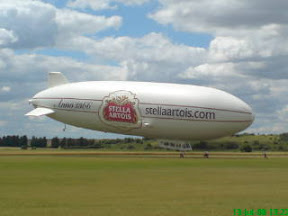
Zeppelin NT arrives in London - Updated Now with Video
As Airship Ventures reports today the Zeppelin NT #4 has made it to London and is now based at the Damyns Hall airfield.
To read more about the Zeppelin NT in London read our previous posts:
[Update] a video of the Zeppelin landing in Damyns Hall just appeared on YouTube watch it here: "Damyns Hall and The Star Over London"
To read more about the Zeppelin NT in London read our previous posts:
- The Zeppelin NT #4 on its way to London
- Star Over London Website online.
- London Baby ! - Zeppelin NT starts flights July 10th 2008
- We have confirmation. Zeppelins over London this year
[Update] a video of the Zeppelin landing in Damyns Hall just appeared on YouTube watch it here: "Damyns Hall and The Star Over London"
tags:
airshipventures,
london,
NT,
star over london,
zeppelin
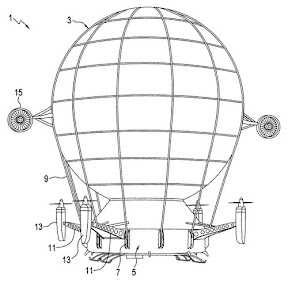
Patent for the JHL-40 Skyhook
© SkyhookThe full HYBRID LIFT AIR VEHICLE Patent here:
Read this document on Scribd: Skyhook Patent - HYBRID LIFT AIR VEHICLE PCT/CA2007/001505
Saturday, July 12, 2008
Skyship News - from Florida and beyond
The Skyship that is patrolling the Florida Keys has been featured on Fox News this week, check out the video below, if you want to read a bit more about it read our article on it here.
The Miami Herald also featured a very nice article about the Coastal Surveillance Airship called "Blimp recruited for interdictions at sea" featured in the article is Capt. Scott Buschman, commander of the Coast Guard Sector Key West he says:
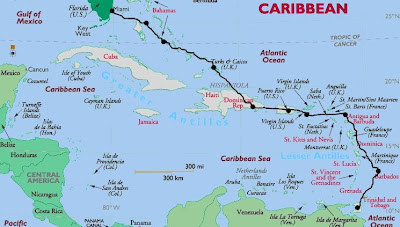
Another operation that was already successful was the mission in Trinidad & Tobago. Here is the impressive route the Skyship took to get from Miami Florida all the way down. Click on the map to see it in a larger size.
The Skyships have been around for a long time and they are here to stay which is great. We will talk about the Skyships and what they have been doing even in the 1980s already. Especially in reference to a certain other airship and what it is doing right now and will be doing soon.
To wrap up I want to treat you with a great picture of the Skyship 600 which can carry up to 12 passengers and has been around since 1984 (yes you read correctly). Click on the image for a larger size
Thanks go out to George Spyrou from Airship Management Services for the Tip on the FOX news report and the pictures as well as Howard Gordon from Surveyor for the tip on the Article in the Miami Herald. We featured Howards little autonomous blimp earlier this year
The Miami Herald also featured a very nice article about the Coastal Surveillance Airship called "Blimp recruited for interdictions at sea" featured in the article is Capt. Scott Buschman, commander of the Coast Guard Sector Key West he says:
"I've certainly never worked with an airship before, but there are several areas of potential for persistent air surveillance -- longer than a helicopter and fixed-wing aircraft. And it certainly is economical."A cutter is a classification of a US Coast Guard vessel that is over 65 feet in length. We wish the Airship Management Services Skyship all the luck and hope that the project is going to be a great success.
and continues
"To me, the airship has the potential to make the cutters much more efficient. The airship is much higher, which expands the horizons and expands the eyes of the cutter."
Another operation that was already successful was the mission in Trinidad & Tobago. Here is the impressive route the Skyship took to get from Miami Florida all the way down. Click on the map to see it in a larger size.
The Skyships have been around for a long time and they are here to stay which is great. We will talk about the Skyships and what they have been doing even in the 1980s already. Especially in reference to a certain other airship and what it is doing right now and will be doing soon.
To wrap up I want to treat you with a great picture of the Skyship 600 which can carry up to 12 passengers and has been around since 1984 (yes you read correctly). Click on the image for a larger size
Thanks go out to George Spyrou from Airship Management Services for the Tip on the FOX news report and the pictures as well as Howard Gordon from Surveyor for the tip on the Article in the Miami Herald. We featured Howards little autonomous blimp earlier this year
Subscribe to:
Posts (Atom)